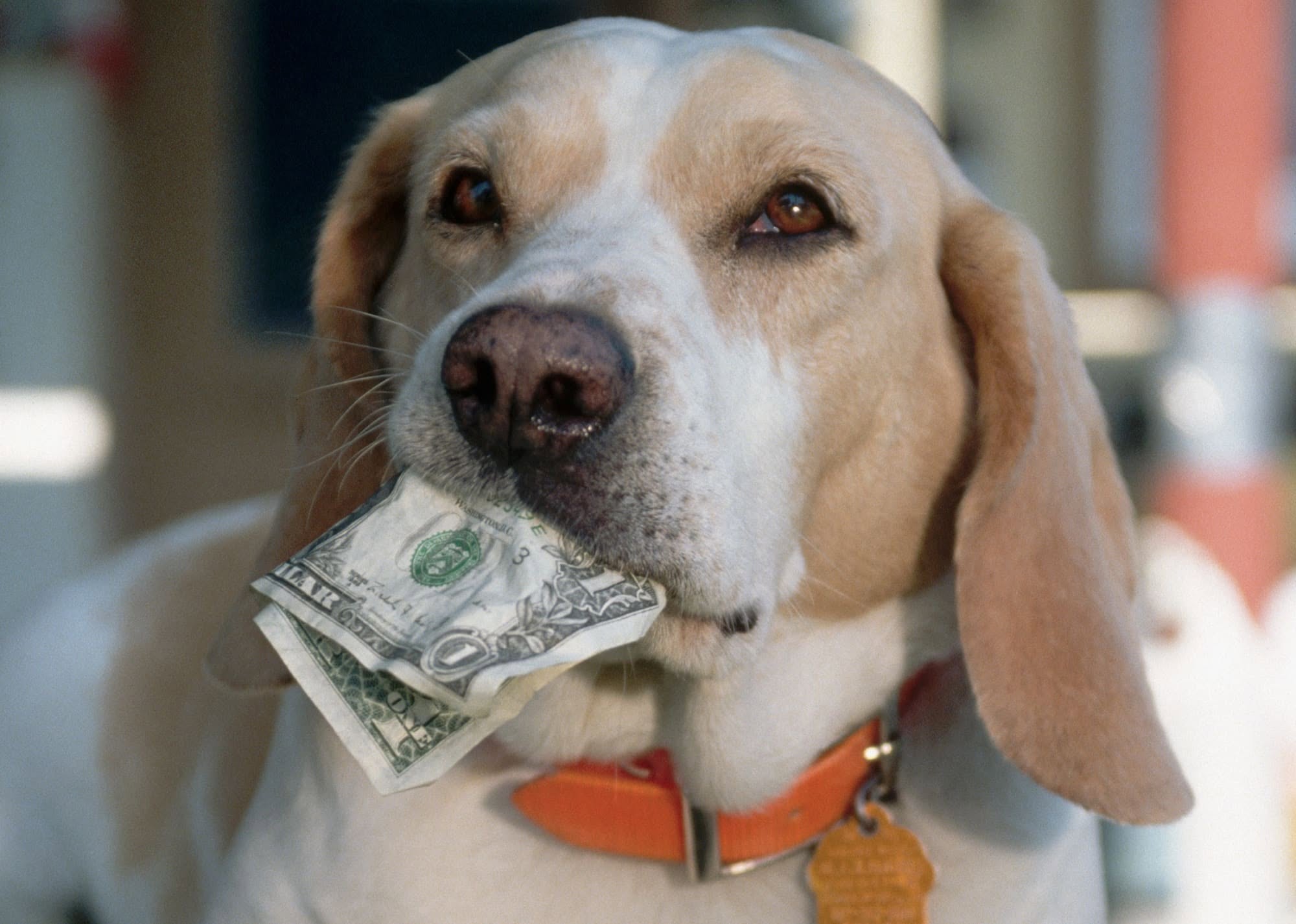
Most of us learned the swap first. The dog has something they shouldn't. You get the chicken, you make the offer, they drop it, you pick the thing up. Everyone breathes out.
Swapping is a useful skill and should be part of your approach. But in a busy shelter with many volunteers and lots of dogs, it often becomes the whole plan instead of just the first step. It's important to think about what swapping really does and what it doesn't address.
What the swap does, and what it doesn't
A swap fixes the immediate issue. If you need to get a sock back before it turns into a medical problem, swapping helps you do that without a struggle. That’s valuable and always will be.
What it doesn't do is change anything about how the dog feels when a person walks toward them holding something good.
If a swap is done poorly, it can actually make things worse. If you only offer food when the dog is already tense and guarding, you create a pattern: person comes close, dog gets tense, food shows up, and their item is taken away. If what you offer isn’t as valuable as what the dog has, they’re right to refuse. If this happens over and over with different people, the dog learns that people coming near means they’ll lose something.
Guarding is normal behaviour. It's what an animal does when something valuable is scarce and might be taken. Shelters are the single best environment humans have ever designed for producing it: scarcity, unpredictability, no control over who walks past, and a rotating cast of strangers with hands.
Start with the dog's own reinforcement hierarchy
"High value treats" don’t mean the same thing for every dog. Each dog decides what’s valuable, and what they want can change from day to day.
Before you try to trade with a dog, figure out what they like most. Make a list and write it on their kennel card.
List six to eight things the dog likes, from most to least valuable. Test these when the dog is calm, not during a problem. Examples might be roast chicken, cheese, tripe stick, kibble, a tennis ball, or even a favorite old bed. Notice where the items they guard fall on this list, because your offer needs to be better than what they’re guarding.
Two things shift the ladder constantly:
Having something makes it more valuable to the dog. A chew toy is much more important once it’s in their mouth than when it was just sitting on the shelf. What you offer needs to be even better than what they already have.
The situation also changes what a dog wants. Things like hunger, excitement, time spent in the kennel, when they last got a treat, or what’s happening nearby all matter. A dog who traded easily on Tuesday might not want to on Friday, and that’s just useful information, not stubbornness.
If a dog refuses to trade, it means your offer wasn’t good enough, you were too close, or both. Try offering something better or standing farther away.
Operant: give the dog something to do
Swapping is something you do for the dog. Operant training is something the dog does themselves, and behaviors they choose to do are more reliable when things get tough.
The important thing is to teach these skills when nothing important is happening. You can’t teach a new skill right when you need it most.
- Teach the drop cue on its own, using low-value items in a quiet place, far from any guarding situations. The dog should practice this many times in a positive way before you ever use it for something important. https://youtu.be/ndTiVOCNY4M?si=DAvBB4pLAhPgpAe9
- Teach the dog to move away from the item. Reward them with food given at a distance. This way, the dog keeps their item and gets a treat for giving you space. You’re helping the dog choose to move away on their own, instead of being forced.
- Try Chirag Patel’s Counting Game: count out loud in a calm, steady way, and place a piece of food away from the dog with each count. Dogs learn the pattern quickly, and it helps them move away from the item. You don’t ask for anything, you don’t reach for the resource, and the dog can choose to join or not. Practice this when nothing important is at stake, so the dog knows the routine when it matters.https://www.youtube.com/watch?v=Ra8TKCwTDbk
- Teach the dog to go to a mat or station—make it a place they want to be.
All these methods have something in common: the dog stays in control, and nothing is taken away by force. When dogs have some say in what happens, they tend to guard less, because guarding comes from feeling out of control.
The layer underneath: changing how the dog feels
Operant training teaches a behavior. Classical conditioning helps the dog feel better, so they don’t need to use that behavior as much.
A dog might do a perfect drop even if they feel uneasy about the person asking. That behavior works until one day it doesn’t, maybe because someone gets too close, moves too quickly, or the dog is just more tired than usual.
So, work on conditioning at the same time as teaching skills. The goal is simple to say but tricky to do: when a person comes near, it should always mean something good is coming, no matter what the dog does.
The order is very important. First, the person appears, then the food comes out. If you show the food first, the dog learns to expect food from the bag, not the person. Approach from a distance, toss a great treat, and walk away. Repeat this. Don’t ask for anything or take anything away.
Distance is your main dial, and you set it by watching the dog. Work at whatever distance keeps them loose. The signals that you've gone too far in are subtle, and they show up before anything dramatic: eating faster, going still over the item, a hard little glance sideways, hovering, picking the item up and repositioning it. If you're seeing those, you're already too close, and the rep isn't doing what you want.
Every time a dog practices guarding, it gets stronger. Working below their stress level isn’t just a nice idea, it’s necessary.
What this looks like on a shelter floor
The technical part isn't usually what makes this hard. Consistency is.
If just one volunteer does things their own way at the kennel door, it can undo weeks of careful training—and they might not even realize it. So:
- Management is ongoing, not just when training isn’t working. Give food and special chews in a quiet space. Take away high-value items before cleaning, not while the dog is there. Don’t reach into a kennel just to take something away.
- Put protocol cards on kennels, written in simple language. Don’t just write "resource guards." Make sure new volunteers know what to give, where to stand, what to do if the dog has something they shouldn’t, and who to call for help.
- Write down each dog’s value ladder, so the next person on shift doesn’t have to figure it out all over again.
- Keep a log of each session- note the distance, the item, and the dog’s response. This is the only way to know if you’re making progress or just repeating the same steps.
- Remember, the shelter environment affects behavior. Some of what you see is just kennel stress, and things may look different in a foster home. Make a note of this instead of giving the dog a permanent label.
- Know your limits. If a dog has a bite history, shows redirected aggression, or guards in many situations, your behavior lead should handle it, or you can check out our individual animal support page
Try this week
Pick one dog on your guarding list and do three things:
- Build their value ladder and write it on the card.
- Run five approach-and-toss reps a day at a distance where they stay loose. Ask for nothing.
- Start teaching drop somewhere quiet, with items nobody cares about.
What does your shelter do for guarding protocols? Share your approach in the comments. Consistency is still the biggest challenge for everyone.

0 Comments