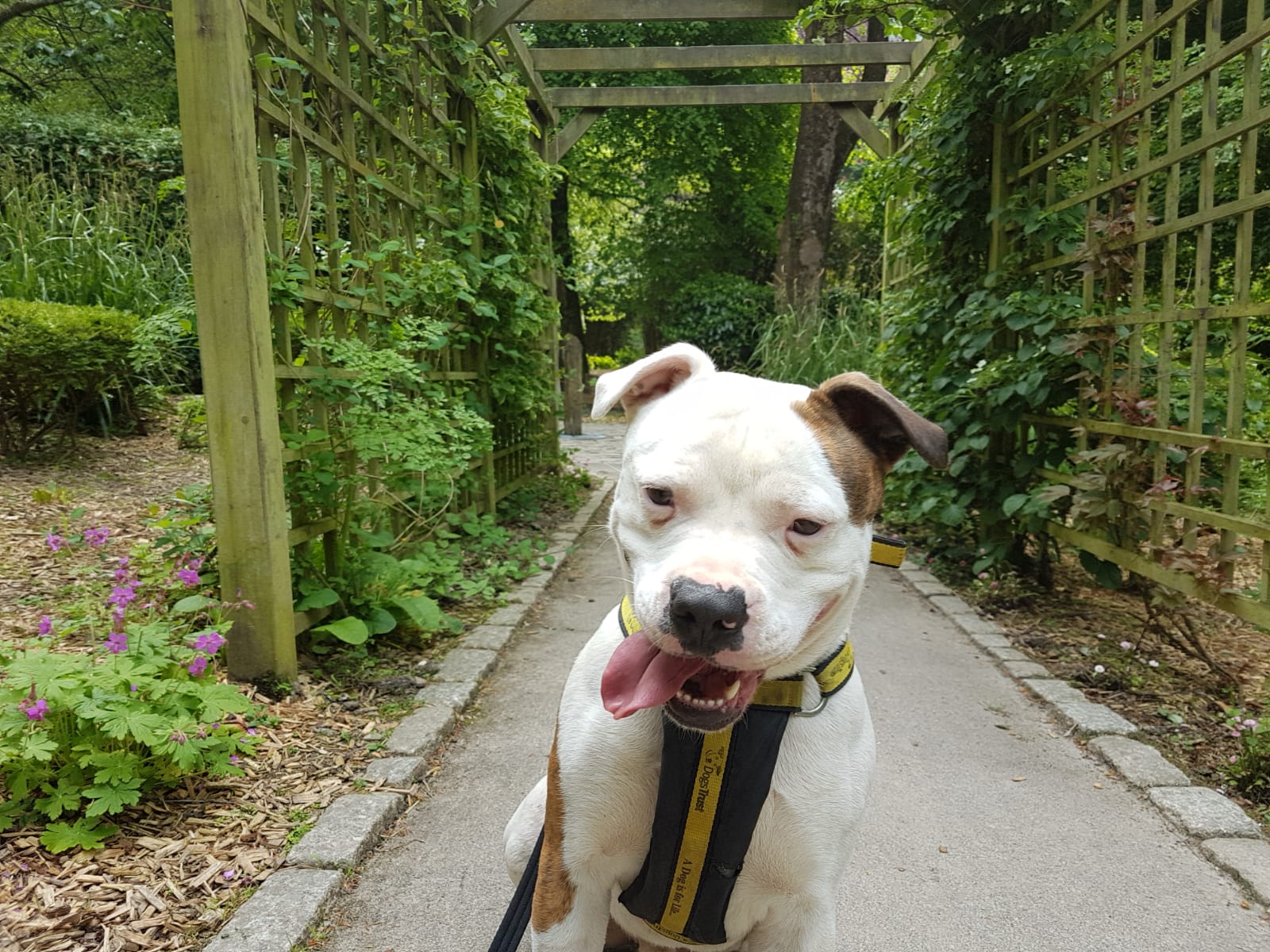
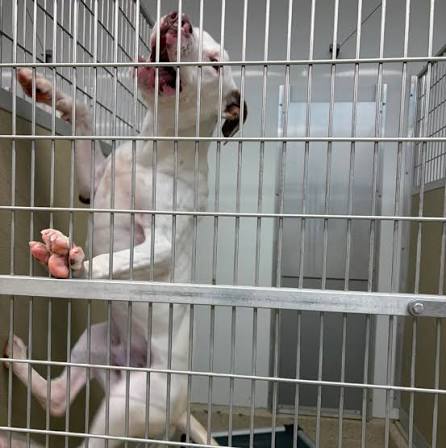
In our Pip case study (Read Here), a few nights away from the kennel made a real difference to a dog who was struggling with repetitive behaviours, poor sleep and weight loss. But Pip is one dog. The questions that usually come next are the same ones every time: what does the research actually say, and how do we start something like this at our own shelter?
This blog covers both. First, what the studies on field trips and overnight fostering have found, including the parts that are less comfortable to read. Then, a practical guide to setting up a programme.
In brief
- Sleepovers lower stress while dogs are away. Field trips don't show the same effect in the cortisol research, but both are linked to more adoptions.
- You can start with a one-month pilot using existing staff and volunteers.
- The main risks (bites, escapes, liability) are managed through dog selection, equipment, written agreements and an insurance check.
- Tracking trips, incidents and adoptions gives you something to show trustees.
Two different things
The terms get mixed up, but the research treats them differently, so it helps to separate them.
- Field trips (brief outings): a few hours away from the shelter with a member of staff, a volunteer or a member of the public, usually to a park, a café or someone's home.
- Sleepovers (temporary fostering): one or more nights in a home, from a single night up to about a week.
What the research says
Sleepovers lower stress while the dog is away. In a study of 207 dogs across five US shelters, dogs stayed in volunteer foster homes for one or two nights. Their cortisol (a stress hormone, measured in urine) dropped significantly during the stay, and they had their longest uninterrupted rest bouts, averaging nearly six hours (Gunter et al., 2019).
A week away shows the same pattern. A 2026 study followed 84 dogs at two shelters through five days in the shelter, seven days in a foster home and five days back. Cortisol was significantly lower in the foster home than in either shelter phase, with the lowest values from the second day at home onwards (Gunter et al., 2026).
Dogs return to their usual level, not above it. In both studies, cortisol after returning to the shelter was back at pre-fostering levels rather than higher. The flip side is that the benefit doesn't carry over. A sleepover is relief, not a fix.
Field trips look different. In a study of 164 dogs at four US shelters, dogs went on outings of around two and a half hours. Cortisol was higher on the afternoon of the outing than the day before or after, then returned to usual levels the next day. The outings weren't standardised: around three-quarters included outdoor time, about 30% included a pet-friendly shop or café, and about 44% included a visit to someone's home. The study didn't separate these activities, so we can't say which parts were stressful, but the authors point to novel sights and sounds as a likely contributor (Gunter et al., 2021). The authors suggest future studies try calmer outings, such as to a quiet location or a home, which may show the cortisol reductions seen with fostering. That hasn't been tested yet.
But people see calmer, happier dogs. Louisville Metro Animal Services in the US asked staff and field trip carers to rate dogs on 21 behaviours before and after around 50 three-hour trips. Ratings improved on 15 of the 21, including less trembling and fewer repetitive behaviours such as jumping and circling (Maddie's Fund). This was a programme report rather than a controlled study, and the ratings were subjective. It does show that a hormone measure and what people observe are not the same thing, which is a good reason to use both in your own programme.
Both seem to help dogs find homes. Across 51 US shelters, 1,955 dogs that took part in outings or sleepovers were compared with 25,946 that didn't. Dogs on outings were about five times more likely to be adopted, and dogs on sleepovers more than 14 times. Around 4% of outing dogs were adopted by the person who took them out, rising to about 12% after overnight stays, which means most adopters were people who had never taken the dog out at all. The researchers suggest the extra visibility in the community mattered (Virginia Tech and Arizona State University, 2023).
Community carers matter. A study of 19 US shelters during the first months of the COVID-19 pandemic found that foster carers with no previous connection to the shelter were over four times more likely to adopt their foster dog than carers who already had one (Gunter et al., 2022).
What the research doesn't tell us
It's worth being clear about the limits before building a programme around it.
- The hardest dogs were mostly left out. Dogs with aggression histories, or who were fearful of the collection equipment, were excluded from the cortisol studies. The results may not apply to the dogs we worry about most.
- The adoption data is observational. Dogs in the programmes already had longer shelter stays than the comparison dogs, and shelters may have chosen the dogs who needed the most help.
- The shelter itself matters. In the 2019 and 2026 studies, differences between shelters could be as large as the effect of fostering. A sleepover can't replace improving the kennel environment.
- Repeated back-and-forth hasn't been studied as far as we're aware. The published work looks at single outings or single stays, not a few nights away followed by days back in kennels. That is why we monitor individual dogs closely, as with Pip, whose first night was hard and who seemed worse the next day in kennels before settling on the second night.
What it takes
Before the detail, here is what a programme asks of your organisation.
- People: the toolkit suggests training three or four dedicated volunteers to run it, each giving around six hours a month, with a staff lead such as a foster coordinator or someone from the behaviour team choosing the dogs.
- Time: about 20 minutes a week to review the figures once it's running.
- Kit and cost: harnesses, collars, leads, ID tags, waste bags, treats and water bottles. The researchers behind the 2023 study describe this kind of programme as relatively low cost, but note that it needs financial and human support, and that programmes worked better in shelters with more resources.
- Risk: the main ones are bites, escapes and an incident where a dog's history wasn't shared. They are managed through dog selection, equipment, supervision rules, a written agreement and an insurance check, all covered in the steps below.
- Possible return: the authors of the 2026 study recommend foster homes as a way to shorten shelter stays, which may also reduce care costs. That is their recommendation rather than something they measured.
How to set up a programme
The steps below draw on the Field Trip Pilot Program Toolkit from Maddie's Fund, combined with what the research suggests. They're written for outings first, with notes for sleepovers.
1. Start with a pilot. The toolkit suggests a one-month pilot. Begin with staff and existing volunteers, then widen access as your confidence grows. Decide what you want to measure before you start.
2. Choose the right dogs. Start with dogs who are struggling most with kennel life, like Pip: repetitive behaviours, poor sleep, weight loss, frustration on walks. Have your behaviour team agree a running list. Dogs with any history of aggression, or who are very reactive or mouthy, should only go with an experienced carer and manager sign-off. Share the dog's full behavioural history before they leave the building. The toolkit calls this one of the biggest risk-management points.
3. Recruit and onboard people. Start with staff and trusted volunteers, then open it to members of the public once you're confident. Keep the time between application and orientation short so people don't lose interest. Use a written agreement, and have it and your insurance checked before you launch. Members of the public are worth recruiting, given how much more likely they are to adopt.
4. Set the ground rules and kit.
- A secure harness plus a collar, linked with a carabiner as a backup
- ID tag and an emergency contact card
- Supervision at all times, and no off-lead time in public places
- No introductions to other dogs without approval
- At least an hour for an outing, with a list of quiet destinations for fearful or reactive dogs
- A sign on the kennel showing where the dog is
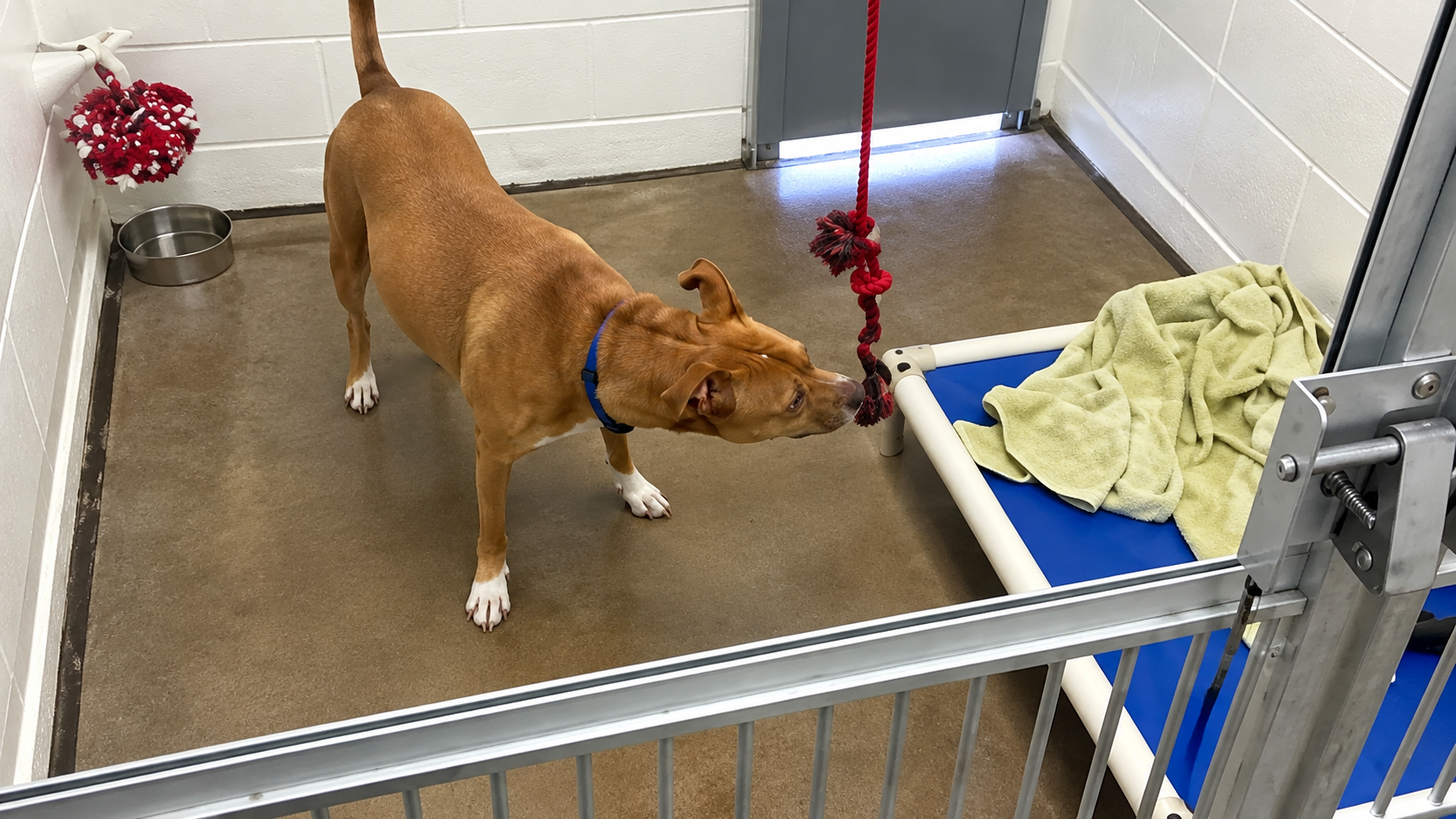
5. Plan the handover. For sleepovers, give carers written instructions on feeding, routine and equipment, and agree where the dog will sleep. A settled spot with enrichment, such as the resting pen Pip used, works well. Tell carers up front that the first night can be unsettled.
6. Plan the return. Keep the return calm and predictable, with something waiting in the kennel rather than just a lead coming off. Our [kennel refusing](ADD LINK HERE) tips cover this in more detail. Watch dogs closely for the first nights back for warning signs such as pacing, vocalising at the gate, poor settling or damage to the kennel.
7. Capture what you learn. Give every carer a feedback form: how the dog settled, how they slept, how they were with people, dogs and new places. Ask for photos and video too. This information feeds straight into behaviour plans and adopter matching, which is one of the biggest benefits of the whole programme.
8. Track and review. Record the number of trips and dogs, carers, any incidents, and adoptions linked to a trip. Review it weekly (the toolkit suggests around 20 minutes), then adjust. Louisville reported that about 20% of its field trips led directly to an adoption.
9. Plan for success. Workload grows as programmes take off. Assign people early so it doesn't land on one member of staff.
The bigger picture
Time out of the kennel gives dogs relief, gives us information we can't get any other way, and gives the community a reason to meet them. It won't fix the kennel environment, and it won't suit every dog. But a well-run programme is one of the most practical things a shelter can do for the dogs who are finding kennel life hardest.
Tell us what's working in your shelter
Do you run field trips or sleepovers already? What has worked, and what would you do differently? We'd love to hear from you in the comments.
References
- Gunter et al. (2019). Evaluating the effects of a temporary fostering program on shelter dog welfare. PeerJ.
- Gunter et al. (2021). Investigating the impact of brief outings on the welfare of dogs living in US shelters. Animals.
- Gunter et al. (2022). Emergency fostering of dogs from animal shelters during the COVID-19 pandemic. Frontiers in Veterinary Science.
- Virginia Tech and Arizona State University (2023). Researchers discover way to boost shelter dog adoptions.
- Gunter et al. (2026). The implications of weeklong fostering and co-housing on shelter dog welfare. PeerJ.
- Maddie's Fund. Study: Can foster field trips improve welfare in dogs?
- Maddie's Fund. Field Trip Pilot Program Toolkit.



0 Comments