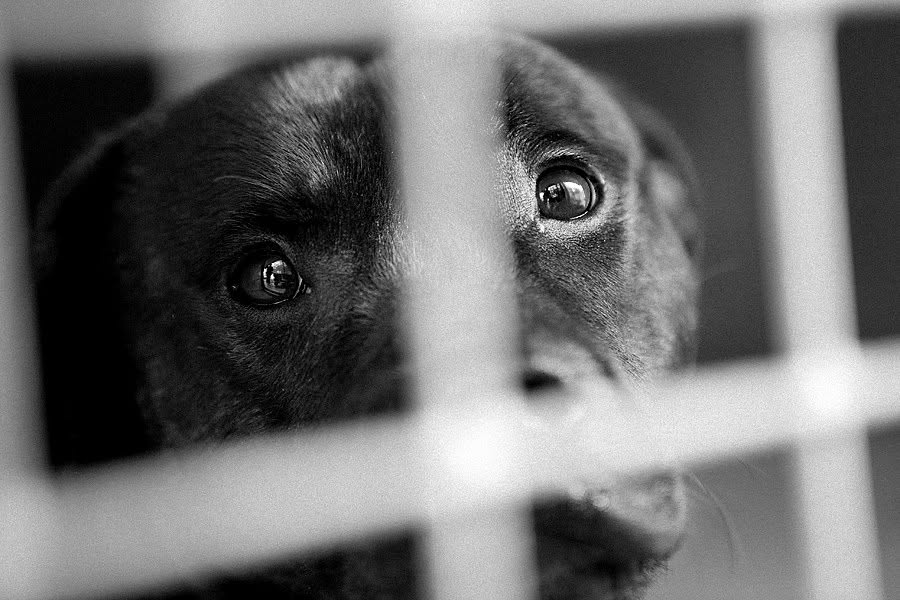
We’ve all been there, stuck outside a kennel, conscious of everything else we have to do, and feeling for the dog. It can look like stubbornness, or like a dog who’s “being difficult,” but a dog planting their feet at the kennel door is communicating something. The question isn’t how to get them back in faster, it’s why they don’t want to go back in at all.
Here are five things worth looking at.
1. Is the kennel right for the dog
Before anything else, it’s worth asking whether the kennel itself fits this dog. Size, location on the block, noise levels, visibility of other dogs, proximity to a busy walkway, all of it affects how safe and settled a dog can actually feel in that space. A dog refusing to go back into a kennel that’s too exposed, too loud, or too close to a dog they find stressful isn’t being awkward, they’re telling you the environment isn’t working for them. Sometimes the fix isn’t more training, it’s simply moving the dog.
2. Create a predictable routine on return, that isn’t just walking away
If the only thing that happens on return is the lead comes off and the handler leaves, the walk ending and the person disappearing become one single, unwelcome event. Build in a short, consistent routine instead, something calm and the same every time, before you go.
Where you do that matters too. Interacting with the dog inside the kennel, rather than just through the bars or the door, changes what the space means to them, it becomes somewhere good things happen with you, not just somewhere you leave them. If going inside isn’t appropriate for a particular dog, keep the through-the-bars interaction itself calm and purposeful rather than a rushed afterthought on the way out. That could be a moment of settling together, a chew to start as you leave, or simply not making your exit instant and abrupt. Predictability lowers anxiety, abruptness raises it.
3. Make the kennel a better place to be
If the kennel itself is just four walls and a bed, there’s little reason for a dog to want to return to it. Enrichment, something to chew, sniff, or work at, gives the kennel its own value, rather than it only ever representing the end of something better. A dog who has something worth going back to is a very different proposition from a dog who’s simply being returned to an empty space.
4. Co-housing
For some dogs, the root issue isn’t the kennel at all, it’s being alone. Where appropriate and safely assessed, co-housing with a compatible dog can remove a huge amount of that difficulty, because the dog isn’t coming back to isolation, they’re coming back to company. This isn’t right for every dog, but where it fits, it can change the whole picture.
5. Time in alternative spaces
Sometimes the most useful thing isn’t fixing the kennel return at all, it’s rethinking how much time that dog needs to spend in a kennel in the first place. Time in an office, a foster home, or another alternative space can relieve pressure that no amount of kennel-based tweaking will solve. A dog who struggles badly with kennel life doesn’t always need a better kennel, sometimes they need less kennel.
The bigger picture
Kennel refusing isn’t one problem with one fix. It’s a dog telling you something about their environment, their routine, their social needs, or how much kennel life is actually suiting them. The job isn’t to override that message, it’s to listen to it and adjust what we can.
If you’d like support with one of your dogs, click the button below.