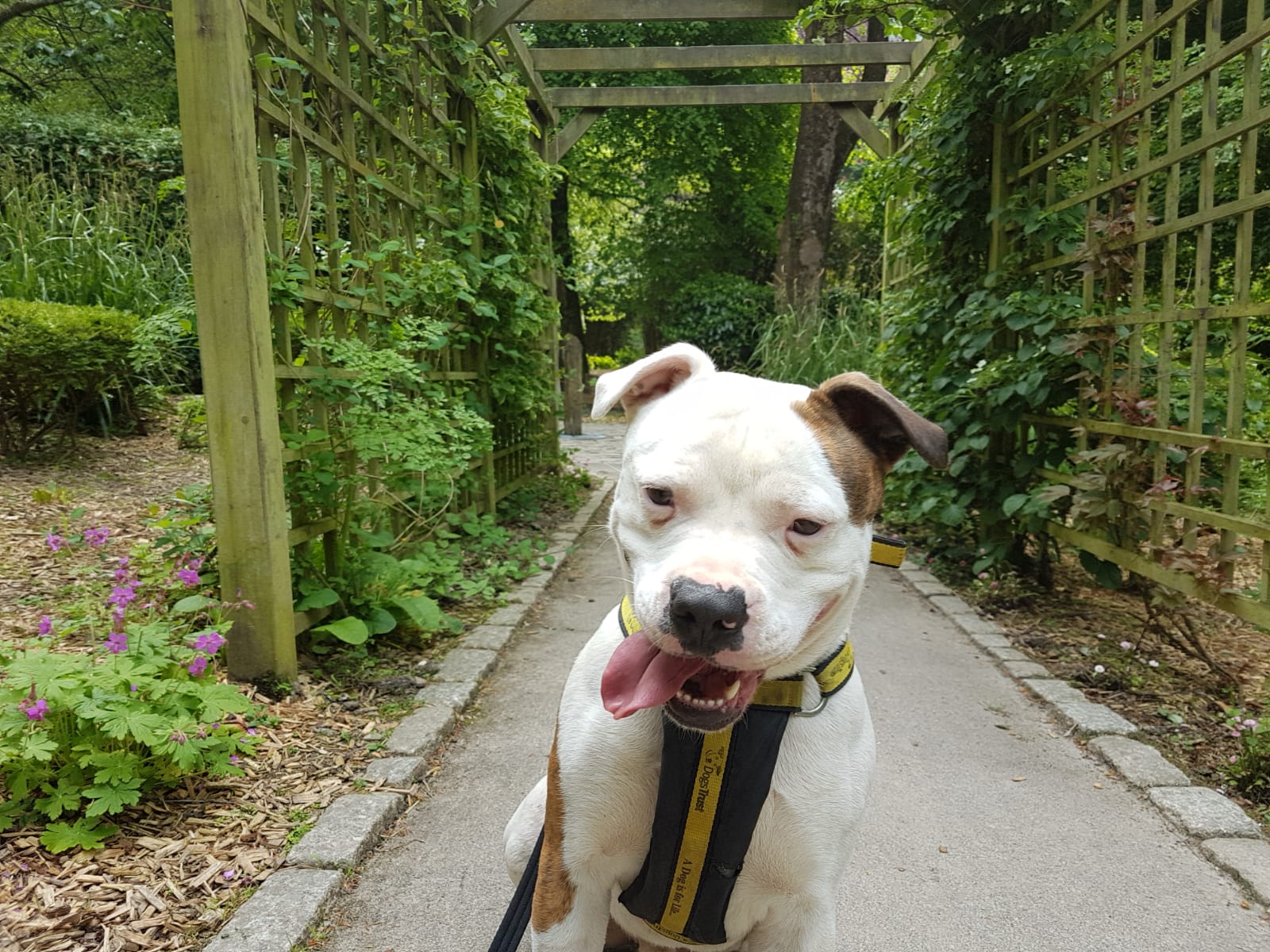
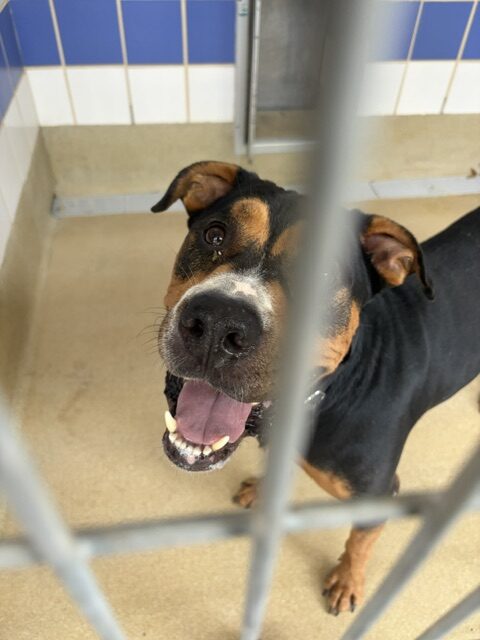
A walk is a chance to build a bond with a dog, and the moment you arrive at the kennel is where it starts. But for an excitable dog, that moment can be hard to make the most of. By the time the lead is on and you're heading for the gate, they may already be spinning, barking, jumping up or bolting past you as soon as the door opens. That's hard on the dog, hard on the handler, and it gets in the way of the connection a walk should build.
Excitement isn't bad behaviour. It's a dog who is finding it hard to regulate big feelings. Our job isn't to control them or to demand calm, it's to support them to regulate, so the exit becomes a moment of connection rather than a struggle. In our Luca case study, a dog who used to chase people out of his kennel was given a sit and wait to do instead, and enrichment waiting for him afterwards. Here are five ways to support dogs in the same way.
1. Start before the door opens
For many dogs, a person arriving at the kennel has come to mean one thing: a scramble. Jumping, barking and spinning have worked for them before, so it's no surprise they do it again. We can't expect that to change overnight, but we can teach a new pattern one small step at a time.
Start with a slow, quiet approach, without the excited voice or the big greeting. Then build it up in stages:
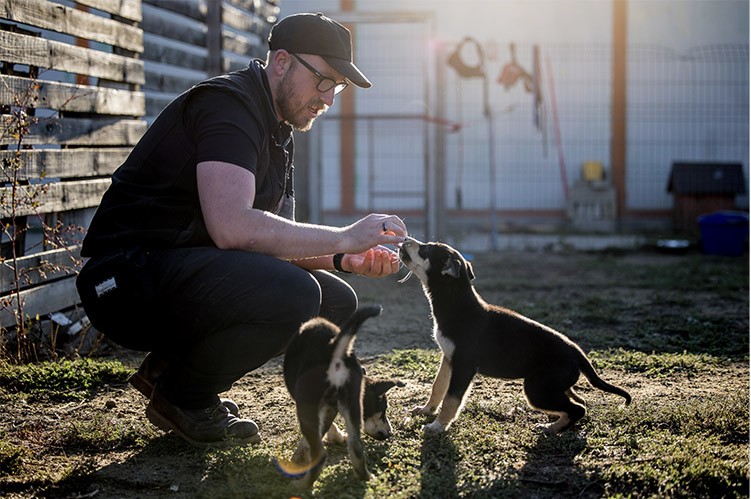
- Reward from the outside, low down. Before you touch the door, feed a treat through the bars close to the floor. Because the treat is low, the dog is rewarded for having four paws on the ground, and jumping up gets them nowhere. Repeat this until they start to expect it.
- Toss a treat away. Once they're comfortable with that, toss a treat to the back of the kennel instead. The dog turns away from the door to find it, which gives them something to do and gives you a calm moment to come in.
- Clip your lead to the short tab. While they're busy searching, step in calmly and clip your lead to the short tab, rather than reaching over or around an excited dog.
Move on only when the dog is ready. If they're jumping or barking, go back a step, wait and reward the moment they settle. Over time, your arrival becomes the start of something predictable and rewarding, and the dog learns that settling is what makes good things happen.
2. Give them something to do
A dog who rushes out of the kennel often hasn't got another way to say "let's go". Telling them off or blocking the door doesn't give them an alternative, and it can add to the frustration they're already feeling.
Offer a behaviour as an outlet instead, but choose it with care. Passive behaviours, such as a sit and wait, ask a dog to hold still, and that can be really difficult for a dog who hasn't left their kennel for a while. The more pent up they are, the harder stillness becomes, and asking for it too soon can add to the frustration rather than ease it.
Start with active behaviours instead, like a hand touch, a "look at me" or following a treat for a few steps. They give the dog somewhere to put that energy and a way to communicate with you. Once they've had a chance to move and let off some steam, passive behaviours become much more achievable. Start in easy moments, reward generously, and build up slowly: first a second of waiting, then two, then the door opening a little. Keep it a conversation, not a test.
3. Use a short attachment to move into the run, and harness there
Harnessing in the kennel doorway is often where things get difficult. The handler is leaning over an excited dog, the door is open, and there's little space for either of you to move. That's a lot of pressure for a dog who is already struggling to regulate.
One option is a short lead or tab that you can clip a lead to. This makes it much quicker and easier to get the dog on lead, without having to struggle with a collar ring or a harness. You can then guide the dog out of the kennel and into the run, and fit the harness there. The run gives the dog space to move and gives you a secure area with the outer gate closed. It also means you can wait for the dog to settle before you start, rather than trying to harness at the moment of highest excitement.
A few things to keep in mind:
- Keep it short and light. The aim is to guide, not to restrain.
- Check it suits the dog. Some dogs find being touched at the collar difficult, so build that up gradually with treats and don't force it.
- Risk assess it for your site. Layouts differ, so agree it with your team first.
4. Take something in with you
Food can do a lot of the work at the kennel door. Taking something into the kennel with you gives the dog something to focus on, helps them settle, and distracts them while you clip them on, so you aren't competing with an excited dog for their attention.
Choose something that makes the food last longer and keeps the dog engaged:
- Lick mats, such as a Lickimat, spread with a soft treat give them something to lick.
- Squeeze cheese or similar spreads can be dabbed on a wall or a mat to make a small treat last much longer.
- Snuffle mats make the dog search for scattered food.
Sniffing and licking are slow, repetitive activities, and many dogs settle more easily while doing them. They also slow the moment down, so you aren't racing against an excited dog. If the dog has been in the kennel a while, a quick active game such as tossing a treat to search for can help them let off steam first, then a lick mat helps them wind down. Offer something before the dog is over the top, as it's much easier to keep calm going than to bring it back. It can be a moment to share too: sitting quietly with a dog while they lick is a simple way to build your bond.
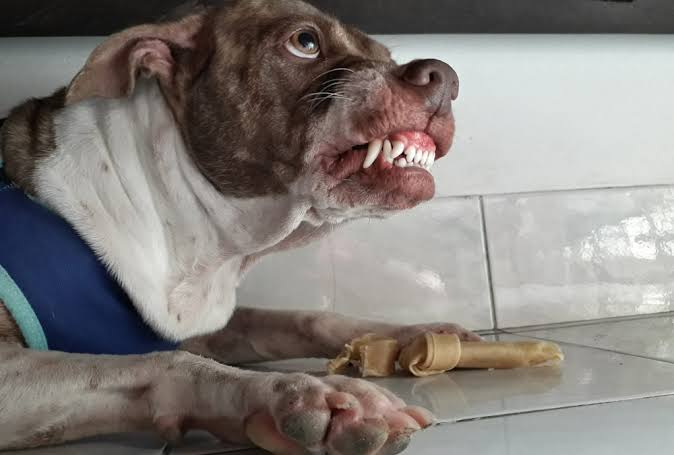
Before you rely on food, check for any concerns the dog has around it. Some dogs tense up, guard or become more aroused when food is around, and for them a lick mat or snuffle mat may add to the pressure rather than ease it. Watch how the dog responds, and if you see signs of concern, give them space and talk to your behaviour team before continuing. Check ingredients, count it in the dog's daily food allowance, and avoid anything containing xylitol.
5. Keep it the same for every handler
Dogs find it easier to regulate when they can predict what happens next. If one member of staff waits for a calm dog and the next throws the door open, the dog never quite knows what to expect.
Agree a simple routine for the whole team and make it easy to follow: the same words, the same wait, the same place to harness, and treat pots and mats stored where everyone can grab them. Add it to your inductions so new staff and volunteers pick it up from day one. It also helps to plan the other end of the walk, which our kennel refusing tips cover.
The bigger picture
Supporting a dog to regulate isn't about getting a quieter kennel exit. It's about helping them feel safe enough to cope with excitement, and making the start of every walk an opportunity to connect. Small habits at the kennel door add up over every walk, every day.
Tell us what's working in your kennels
How do you help dogs settle before a walk? Whether it's a sit and wait, a lick mat in the run or something else entirely, we'd love to hear what's working. Share it in the comments.
Want to develop your teams skillset and knowledge click the link below

0 Comments