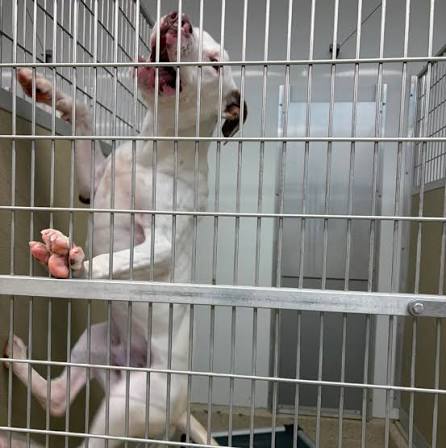
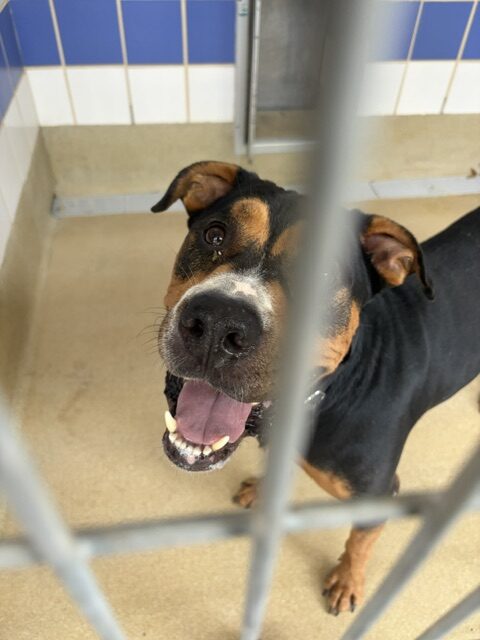
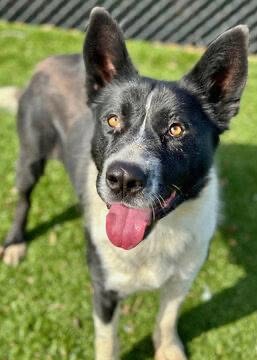
Whenever Kai saw another dog, he would grab the lead and hold on, and walks quickly turned into a tug of war. He'd only been with us for about two weeks, but it was already a concern for staff safety and for Kai's welfare.
Lead grabbing can look like a dog who is hard to handle, but there was more going on underneath. In Kai's case, it was frustration. He wanted to get to the other dogs to play and couldn't, and he needed better ways to cope with that, and alternatives to do when other dogs appeared.
What was behind the lead grabbing
Kai had a history of being off lead with other dogs before he came in, so seeing a dog had probably always meant going to play. On a lead, he couldn't get there, and the grabbing was the frustration coming out.
That changed our focus. The trigger wasn't the lead or the handler, it was not being able to reach the dogs. So rather than concentrating on stopping the grabbing, we concentrated on helping him feel relaxed and engaged, and on giving him something else to do.
Starting outside the kennel
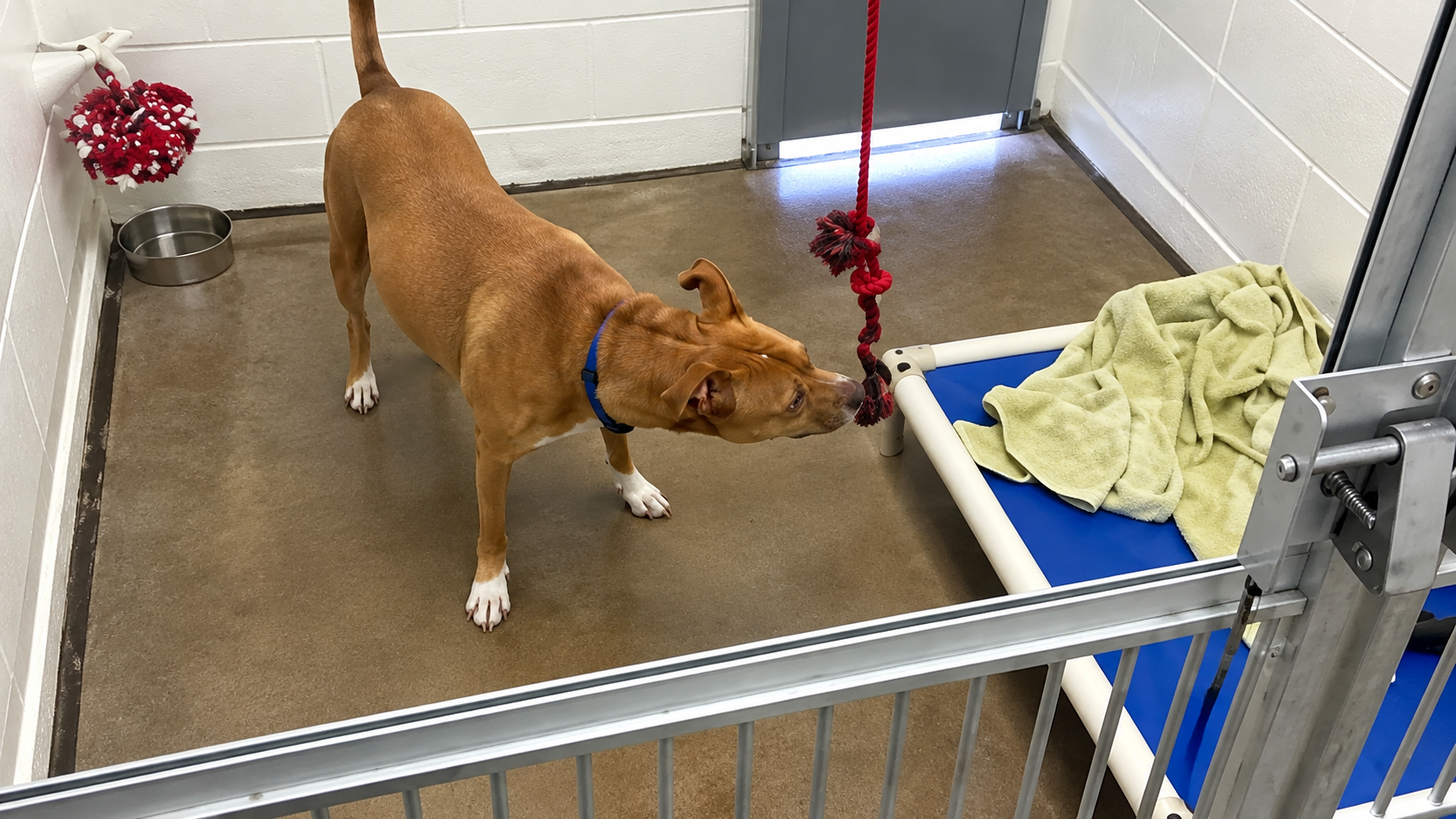
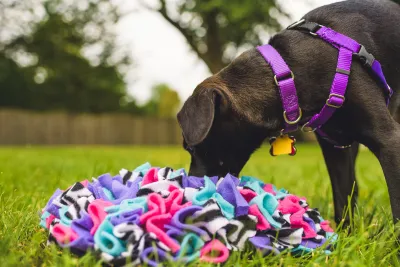
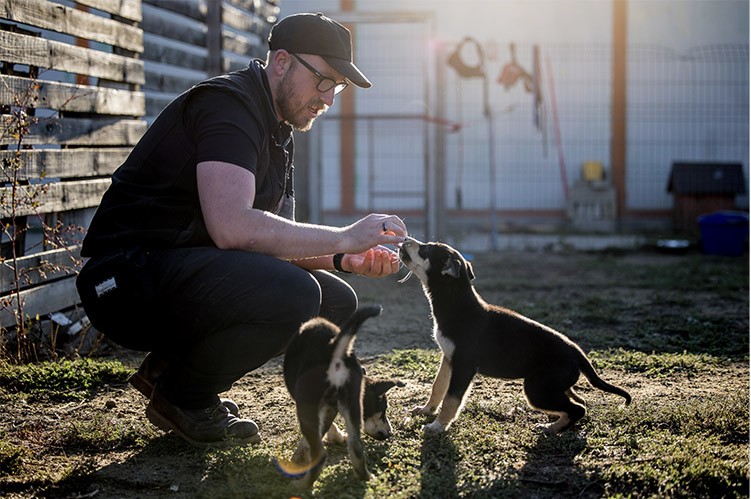
We began right outside his kennel, where it was calm and familiar. We set up freework and enrichment stations there, so Kai had something to do with his brain before we asked him to walk anywhere.
Starting here meant we weren't asking him to cope with anything difficult. He could relax, have a go, and build confidence in working with us.
Taking it on the walk
Once Kai was settled, we built stations into later areas to support his walking. Each one offered different textures and different heights, with enrichment to investigate, so every stop gave him something new to think about.
This kept him relaxed, engaged and using his brain. Instead of scanning for the next dog to appear, he had something to do with us.
Engaged loose lead walking
With those foundations in place, we worked on engaged loose lead walking. We started off lead in the runs and added the lead in later. The aim wasn't a perfect heel, it was a dog who stayed connected to the handler, with a loose lead because he wanted to be there rather than because we were holding him back.
The stations helped here too. They gave us natural places to pause, reward and reset, so walks became a series of calm moments rather than one long struggle.
Appropriate play
Play clearly mattered a lot to Kai, so we worked on appropriate play as well. Longer tug toys with clear on and off cues support learning and fun for frustrated dogs. For a dog who loves other dogs, that meets a real need.
What changed underneath it all
Kai wasn't a dog who couldn't walk on a lead. He was a frustrated dog who wanted to play and had no other way to cope. When we gave him better coping strategies and things to do instead, grabbing the lead stopped being his only answer.
The lead grabbing reduced massively, and Kai was rehomed with another dog.
Have you worked with a dog who grabs the lead when they see other dogs? What has helped them cope? Share it in the comments.
Check out the video here:
https://youtu.be/co9mUpRYH6E?si=bpueY783O3HnprzF
If you'd like support with a dog like kai, click the button below.
0 Comments